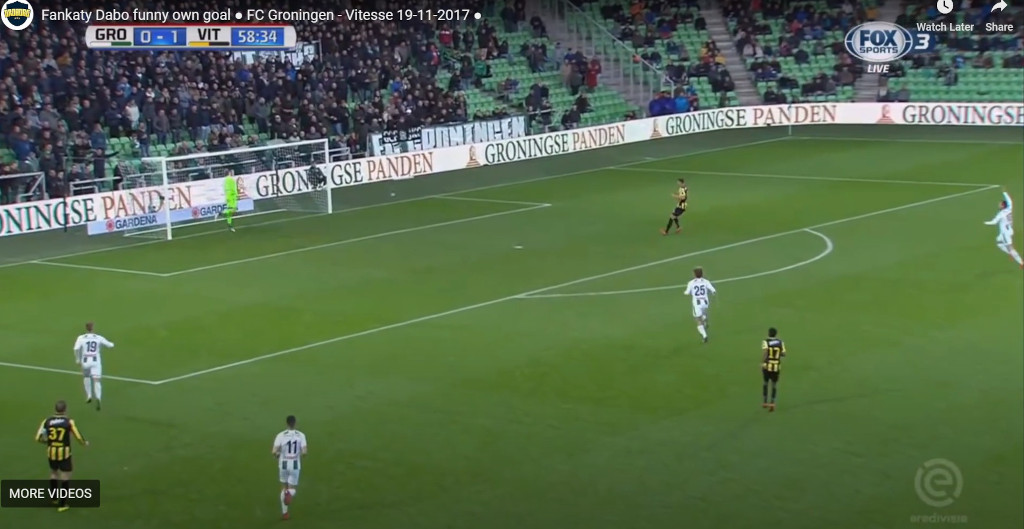
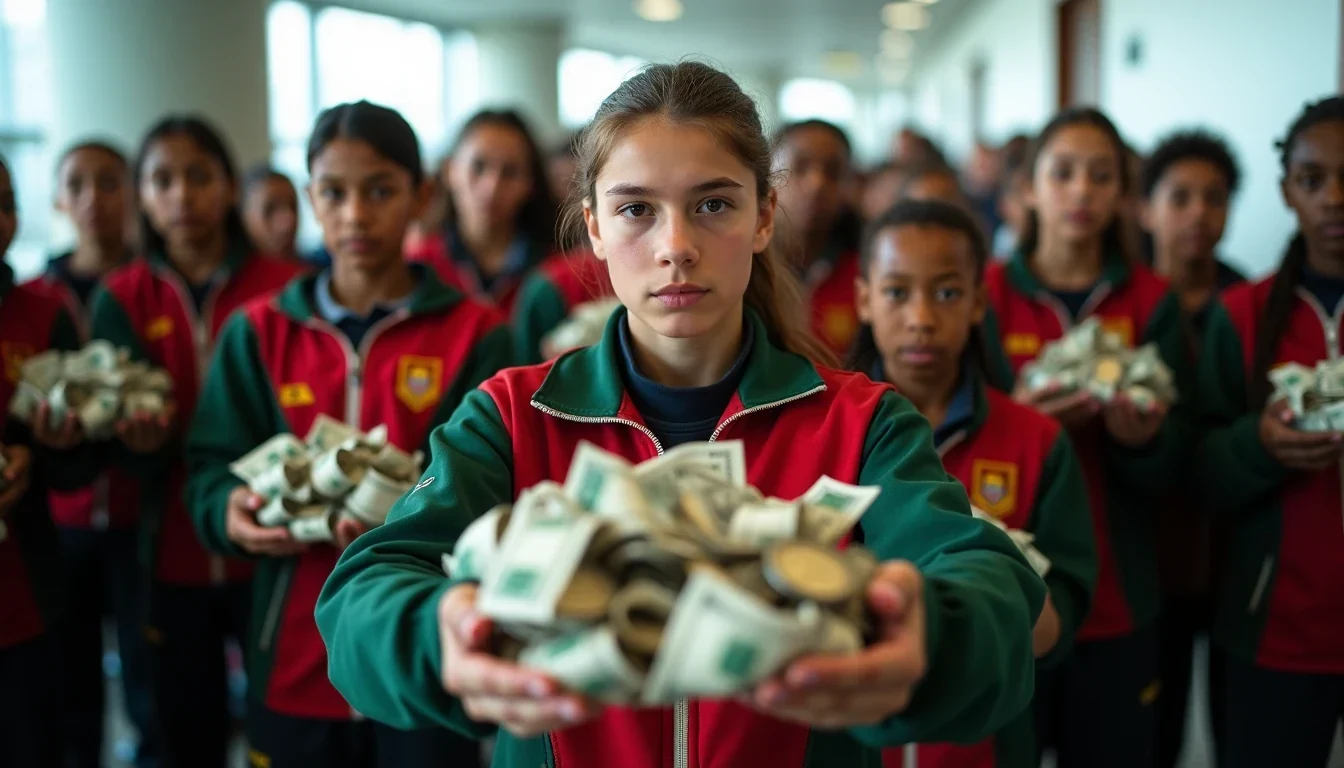
R31 million buys a lot of national pride, provided you define pride as a Qatar hotel buffet and a ministerial delegation with matching luggage. The Department of Sport, Arts and Culture has managed something almost impressive: spending enough to fund a small provincial stadium on a four-week football tournament we did not even qualify for, while 54 under-20 athletes were pooling their own money to get to Oregon.
The timing is not subtle. In July 2026, federations were already screaming about grants that had not arrived. Athletics South Africa had nothing from the annual allocation that keeps the sport breathing. The department’s chequebook apparently works fine when the destination involves canapés and a cultural showcase for people who will never visit a township track meet.
What the R31 Million Actually Bought
The Qatar bill breaks down exactly as you would fear. Air travel and luxury accommodation for the minister and senior officials. Ground transport that presumably did not involve the Doha bus system. Lavish receptions where South Africa was “showcased” to potential investors who, three years later, have still not materialised. Promotional materials, branding activations, venue hire, security, and the administrative cost of making sure everyone had the right lanyard.
This was 2022’s World Cup, spent in 2022, but only drawing scrutiny in 2026 because someone finally asked where the paperwork went. The Minister and Director-General signed off. The Director-General endorsed the operational plan. The Public Finance Management Act may or may not have been consulted, depending on which parliamentary oversight member you ask. The Auditor-General’s office has questions. Internal audit raised red flags. Several contracts apparently skipped competitive bidding entirely, which is procurement language for “we knew a guy.”
The department calls this leveraging global visibility. The visibility in question belonged to VIPs in a lounge, not athletes on a field.
Meanwhile, in Oregon, 54 Athletes Were Doing the Maths
Athletics South Africa’s grant had not landed. The under-20 squad heading to Oregon in July 2026 received the standard pre-competition briefing: book your own flights, find your own accommodation, and try not to think about the competition fees eating into your food budget for the month.
Fifty-four athletes. Some qualified through talent alone, then discovered that talent does not cover a transatlantic ticket. They crowdfunded. They begged relatives. They held community appeals in halls where the donation bucket contained more goodwill than cash. Coaches doubled as travel agents. Physiotherapists became a luxury the team could not afford to bring. The focus that should have gone into preparation went into logistics and financial anxiety.
This is the department’s actual development pipeline. Spot talent early, make them prove it repeatedly, then when they reach the threshold of international competition, inform them that representation is a privilege they must purchase themselves. Athletes from disadvantaged backgrounds faced a straightforward choice: debt, or staying home. Some stayed home. The ones who went performed under the stress of knowing their families were sacrificing for a shot the department could not be bothered to fund.
How the Minister Heard R3 Million for Hockey but Not 54 Athletes Begging for Bus Fare
Amid this chaos, the Minister announced R3 million for hockey’s World Cup campaigns. Men’s and women’s teams, both heading to global tournaments, both receiving targeted support that federations like ASA could only watch from their empty bank accounts.
The justification was familiar: national pride, global representation, raising the sport’s profile. The department likely filed it under a separate budget line, as if the distinction matters to an athlete in Oregon who just maxed a credit card for a shot put circle in Eugene.
Hockey deserved the money. The absurdity is not the allocation. It is the timing and the selectivity. The department can find millions for specific sports and specific events while the systematic funding mechanism rots. The message is unmissable: we will fund you if you are already visible enough to matter, if your tournament carries the right prestige, if the Minister can announce it personally. We will not fund the grind that produces the athletes who make those announcements possible.
The Department’s Excuses, Catalogued for Posterity
DSAC has explanations, all of them rehearsed. Administrative backlog. Budgetary reallocation to “critical” projects. Federations submitting incomplete financial reports. A new grant framework that everyone is still learning. The implication is always the same: the athletes are waiting because someone filled out a form wrong, not because the department spent their money on Qatar hospitality.
Cash flow challenges get mentioned unofficially, the kind of aside that admits everything while denying responsibility. The government is broke, except when it is not. Broke for ASA, liquid for Qatar, selectively solvent for hockey.
The compliance excuse deserves particular contempt. Federations must demonstrate governance to receive funds, yet the department burning R31 million on potentially irregular procurement demands no similar threshold. The Auditor-General’s questions sit unanswered while ASA’s paperwork is apparently scrutinised to the molecule.
The VIP Lounge Theory of Development
The operating model, stripped bare, is this: South African sport does not fund potential. It funds outcomes that have already happened, visibility that has already been achieved, moments where a VIP can stand near success and absorb some reflected glory.
The athlete in a township with raw speed and no kit is invisible. The under-20 squad in Oregon is slightly more visible, but still not worth the annual grant. The hockey team at a World Cup is visible enough for a ministerial announcement. The Qatar delegation, surrounded by international counterparts in a climate-controlled tent, is the endpoint of this logic: pure visibility, no athletes required, maximum national pride per Rand spent.
The department has built a machine that works perfectly in reverse. Money flows to where the cameras already are. The cameras go where the money already went. The athletes who might one day attract those cameras are left to self-fund, self-promote, and self-select out if their families cannot afford the gamble.
R31 million for Qatar. R3 million for hockey, announced like a gift. Nothing for ASA, nothing for 54 athletes in Oregon, nothing for the next generation that will not produce itself by accident. The VIP lounge is fully funded. The track is not.