
A municipality that cannot pay its cleaners has no money. A municipality that cannot pay its cleaners but keeps paying its municipal manager has priorities. Tswaing Local Municipality has reportedly managed both, leaving more than 100 general workers three months deep into empty bank accounts while senior staff and councillors collected their full packages without interruption. The arithmetic is not complicated. The ethics are.
The payment dates that came and went
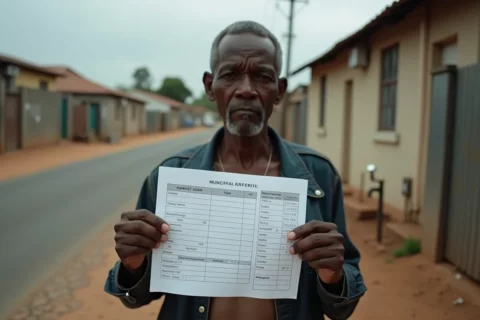
May 2026 wages never arrived for the general workers. The municipality’s first response was a promise of early June, then late June, then mid-July. Each deadline passed like the last, with the same vague explanations about cash flow and delayed transfers. By late July, some workers had missed three consecutive salary cycles. They were still expected to report for duty.
A single broken promise suggests miscalculation. Three consecutive broken promises, each announced with the confidence of someone who knows they will not be held to it, suggests something closer to performance. The municipality has turned the act of not paying people into a recurring event with its own internal schedule.
Who gets paid and who sponsors the operation
While cleaners, waste collectors, and street maintenance crews waited, the municipality’s executive tier remained financially intact. The municipal manager, the chief financial officer, section 56 and 57 managers, the mayor, the speaker, ward councillors all reportedly received their full remuneration. The people who decided who gets paid when managed to keep themselves whole.
This is not a liquidity crisis that affects everyone. This is a selective liquidity crisis, which is simply a decision about who matters. The general workers of Tswaing have been effectively asked to fund local government operations from their own kitchens, petrol tanks, and absent savings. They provide the labour and absorb the cost. The municipality provides the IOU and the expectation of continued service.
What unpaid labour looks like in practice
The workers were still expected to collect refuse, sweep streets, maintain cemeteries, patch potholes, clear drains, and clean the offices where other people received their salaries. Waste collection is not a theoretical service; it becomes visible within days when it stops. The municipality understood this. It simply understood that it could extract the labour without extracting the money.
Some workers reported being unable to afford food for their families or transport to reach their workplaces. The municipality’s response to this appears to have been continued promises of imminent payment, delivered with the same cadence as before. A worker who cannot afford the taxi to work is being asked to subsidise their own exploitation with walking.
The rot beneath the missed pay dates
Tswaing’s current crisis does not arrive without context. The municipality has collected audit disclaimers from the Auditor-General across multiple financial years, signalling financial records too broken to evaluate. Irregular and unauthorised expenditure has been documented repeatedly. Revenue collection from residents and businesses has remained chronically poor. Political leadership has turned over with frequency that suggests instability rather than renewal.
National and provincial interventions have produced recommendations and turnaround strategies. Implementation has not followed. The municipality has demonstrated a consistent ability to identify its problems and an equally consistent inability to address them. The result is a local government that cannot pay its most vulnerable workers but can maintain the compensation of its most powerful.
The silence that answers
The official explanations have remained generic: cash flow challenges, revenue shortfalls, delays in equitable share transfers, administrative processing issues. None of these explanations account for the selective nature of the non-payment. None explain why the municipal manager’s salary cleared while the cleaner’s did not. The framing of the crisis as general financial pressure requires ignoring the specific decisions about who would bear that pressure.
Tswaing Local Municipality has not asked its senior staff to work without pay. It has not asked its councillors to miss a month and see how it feels. It has asked this exclusively of its lowest-paid employees, the people least able to absorb the loss, while continuing to demand their labour for public services that the municipality cannot itself fund. The workers have become, in effect, involuntary creditors to a government that treats their wages as discretionary and their continued service as mandatory.
There is a word for labour without compensation. The municipality appears to believe there is a different word when government does it.