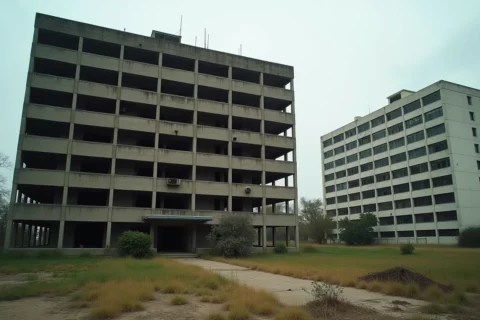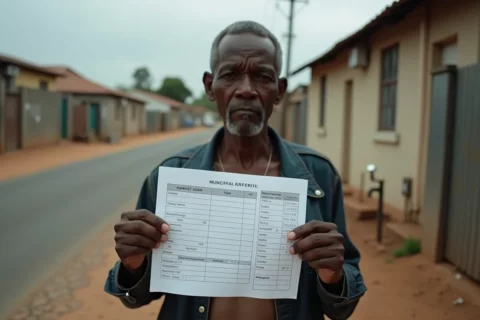

The National Lotteries Commission funded a Soweto sports complex that had the structural integrity of a PowerPoint slide. R9 million was approved. R6 million went out in two tranches. The final R3 million was stopped only after the paperwork had done its worst and the site had done nothing.
By the time the Special Tribunal got involved, the project was both publicly funded and physically absent. Reports described earthworks and fencing. Photographs showed an empty plot. A visit to the site would have confirmed what the documents tried to dress up in stationery: there was no sports complex there. Just land, waiting patiently for someone at the NLC to develop a spine.
The project that lived on paper
The sales pitch for this thing appears to have been written by someone who thought construction was a vibe. Earthworks. Fencing. Progress. The usual nouns thrown at a grant application to make it sound busy. On the ground, the story was less ambitious. No structure. No visible build. No sign that the money had been turned into anything more useful than a bank transfer with a conscience problem.
This makes the whole episode a gift to every taxpayer who has ever been told there is no money for potholes, clinics, or decent public services. A complex that existed in reports, in photos, and in the imagination of the funding office got paid like a real project. The actual site remained stubbornly blank, which is a hell of a performance review for everyone involved.
The money walked off
The Tribunal found that the R6 million already paid was unlawful and ordered it repaid. More than R2 million of that money went straight into personal bank accounts. The rest moved through companies, the classic South African corruption trick of making a theft look like administration.
The tale stops being merely embarrassing and becomes properly insulting. Public money was meant for a community sports facility. Instead it ended up in private hands, while the actual sports complex remained in the same condition as a field after a cancelled braai. No courts, no stands, no fences, no nothing. Just a grant, a trail of transfers, and a site that looked like nobody had even bothered to lie convincingly.
The forensic tools excuse
One NLC official reportedly tried the old defence that the fraud was too clever to spot without forensic tools. That is a bold line to take when the missing facility could apparently have been exposed by getting into a car and driving there.
The judge was not impressed, nor should anyone else be. If your system needs a lab coat and a crime scene board to notice that a sports complex does not exist, your problem is not sophistication. Your problem is that somebody signed off on millions without checking whether the earth had even been disturbed.
The whole argument collapses under the weight of basic reality. This was not an invisible scam hidden in encrypted files under three false identities and a puppet company in a tax haven. It was a patch of land with a claim attached to it. A site visit would have done the work for free. The NLC, apparently, preferred to pay first and squint later.
Mamparra’s development model
Here is a cheaper rollout plan for any future grant officer tempted to repeat this circus. Approve the first tranche. Drive to the site before approving the second. If the first R3 million has become a building, carry on. If it has become empty ground, stop and ask why the paperwork is having a different life from the soil.
That is not innovation or reform. That is simply looking at the thing you paid for before you pay for the rest of it. Yet in this case even that seemed to be too much to ask. The NLC behaved as though verification was a luxury item, like a heated pool or a ministerial convoy.
The usual NLC stench
This case also fits a pattern that has become far too familiar. The commission keeps turning up in stories where public funds were meant to build something useful and instead seem to have built somebody’s private fortune. Non-existent projects. Inflated claims. Funds diverted away from the people they were meant to serve. Different file, same stench.
The scandal is not only that millions moved, but that the checks were so weak that a blank plot could be dressed up as progress long enough for money to leave the building. The Tribunal’s repayment order is the bare minimum answer. It says the grant was unlawful. It says the money must come back. It says the fiction ended, if only after R6 million had already been treated like pocket change.
The real disgrace is simpler. Someone was paid to notice a sports complex. They missed a field.