
The Department of Communications and Digital Technologies produced a national AI policy with citations so imaginary they appear to have been conjured by the very machines the policy was meant to supervise. Somewhere between the drafting desk and the minister’s office, a bibliography full of ghost references wandered through the state like a man in a reflective vest carrying a clipboard, and nobody stopped to ask where it had come from.
Minister Solly Malatsi pulled the draft in April 2026 after an internal process confirmed the embarrassment. His explanation should hang in a frame in every public office: AI-generated citations likely slipped in because no one did the boring, humiliating work of checking them. Cabinet then formally approved the withdrawal in June so the policy could be redone. The state briefly published a guide to responsible AI use that could not survive the most basic test of responsible human use.
The bibliography had one job
A policy document can survive a lot. It can survive jargon, buzzwords about innovation, inclusion, digital transformation, and other words that make officials sound busy. It can even survive a title that makes everyone in the room nod as if they have read it. What it cannot survive, unless the entire process has given up, is a reference list full of fiction.
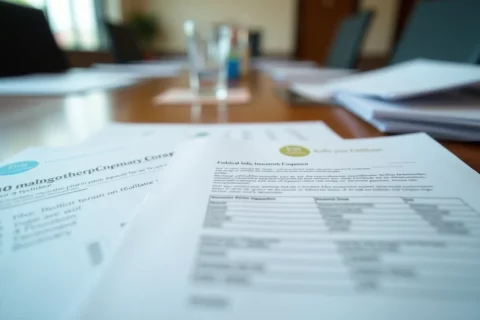
This episode is deliciously rotten. The draft AI policy was published, opened for public comment, and only later did the department discover that some of the sources were made up. They were not badly formatted or misquoted. It was not a case of “we could not access the link.” They were made up—the kind of references that only exist if a machine decided they should exist and a human decided not to check.
The humiliation is not just that the citations were fake. It is that the fake citations made it past the people whose actual job was to stop that from happening. Someone drafted the thing. Someone edited it. Someone sat with the pile of paper or the screen or the PDF and signed off on it. Somewhere along that chain, a grown adult in a government office looked at a bibliography and apparently thought, close enough.
The chain of custody for nonsense
A national policy does not pop out of a printer by accident. It moves. The policy unit touches it, then the director, then the chief director, then the deputy director-general, then the director-general, then the minister’s office. It is then released to the public as though the document had passed through the hands of people capable of spotting when the sources are pure fantasy.
This is the joke, except it is not really a joke. The document was supposed to help govern the country’s approach to artificial intelligence. Instead, it became a live demonstration of what happens when no one in the chain bothers to verify the citations. Every stage meant to add seriousness seems to have added momentum instead. The file kept moving because moving files is easier than reading them.
There is a special kind of bureaucratic confidence in publishing a document like this for public comment. It says, with a straight face, that the department has done the homework and now invites the rest of the country to weigh in. In this case, a chatbot with a flair for academic cosplay appears to have written the homework, and humans who were either rushed, careless, or both, waved it through.
Questions nobody wanted to answer
How many people saw that bibliography and thought it looked normal? How many signatures sat underneath it? How many meetings ended with someone saying the policy was ready, while the sources were still being treated like decorative wallpaper?
This part should worry anyone who has to live under policy written by the state. The embarrassment is not limited to one mistaken draft. It raises the more unpleasant possibility that the process itself has been hollowed out, with each layer of review acting less like a filter and more like a relay handover. An official passes the folder; the next stamps it; the next approves it. By the time the public sees it, nobody wants to be the one who admits they never opened the references.
The department has already withdrawn the draft, and Cabinet has now signed off on that decision so the policy can be reworked. Fine. Necessary, even. But the damage is done. A government that wants to talk about responsible AI has just shown the country what irresponsible AI handling looks like when it wears a tie and gets through the door.
The real scandal is not that a machine hallucinated sources. Machines do that. The scandal is that the adults in the room let the hallucination become government paperwork.