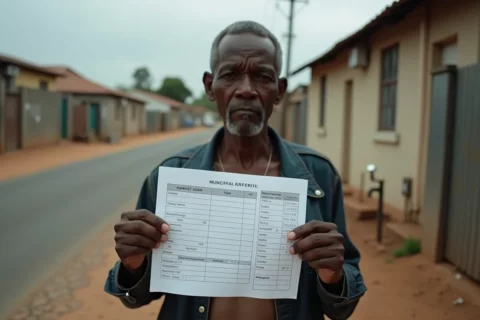
Seven toilets. One thousand five hundred people. Do the maths quickly and you get roughly one seat for every two hundred and fourteen residents of Boxwood Road. This is not so much a sanitation ratio as a queuing theory experiment conducted on human dignity. The eThekwini Municipality would apparently have us believe this is what passes for service delivery in a metro that once marketed itself as the most liveable city in South Africa. Someone in the communications department has a robust sense of humour.
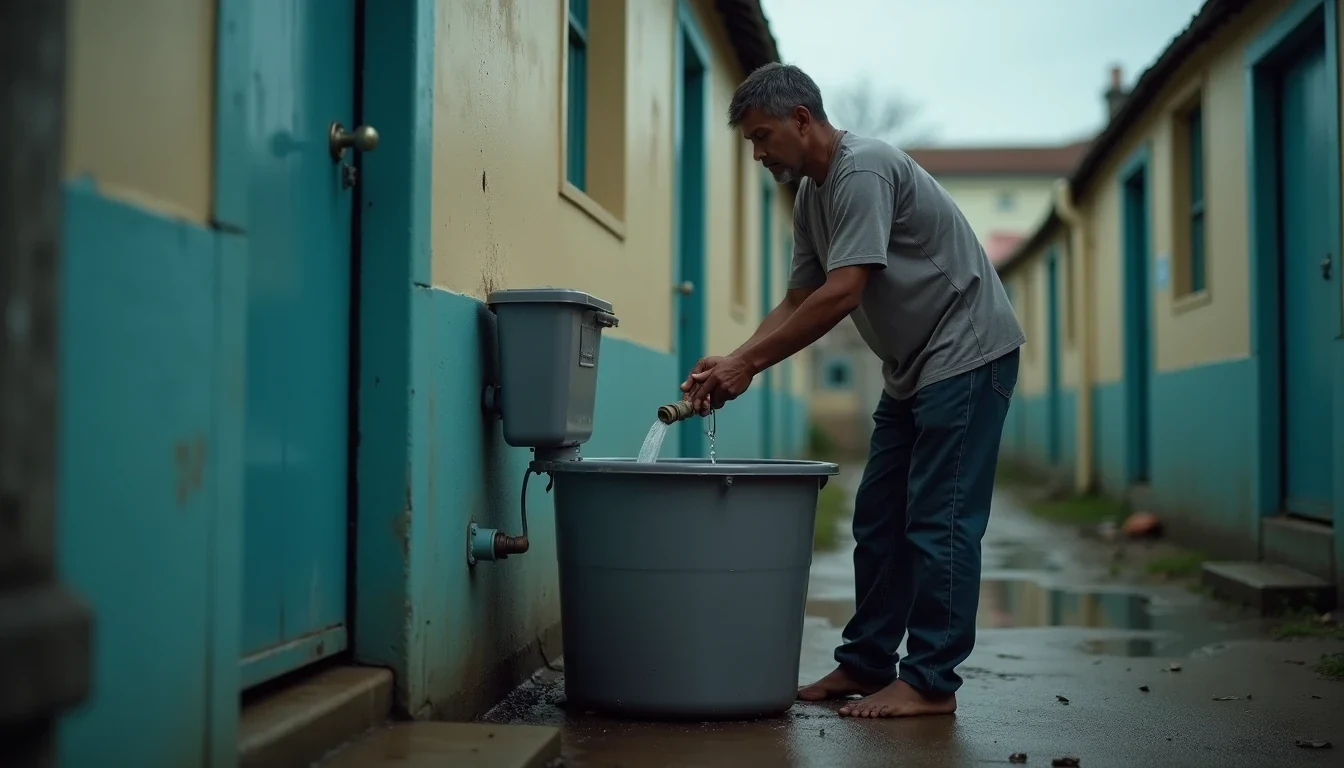
The national guideline suggests one communal facility per twenty to thirty people. Boxwood Road operates at seven times that threshold, even before you account for the broken doors, the missing seats, the absent lids, and the showers that have become decorative wall features. For approximately two years, residents have flushed these toilets with buckets. They do this because the actual flushing mechanism surrendered to entropy and nobody with a municipal toolkit bothered to arrive.
The Water Runs and Nobody Comes
Three months ago, a pipe began leaking at Boxwood Road. It has not stopped. Conservative estimates put the daily loss at over four thousand litres of treated, pumped, billed water. That is nearly four hundred thousand litres across the duration of this single leak, enough to fill a modest swimming pool or sustain a household for months. The eThekwini Water and Sanitation Unit, whose entire purpose is to prevent exactly this scenario, has apparently filed this under “pending” or perhaps “not our ward” or whatever bureaucratic limbo allows a tap to weep continuously while residents carry buckets of their own waste.
The cost lands somewhere north of seven thousand Rand in raw water value, before you factor in the energy for pumping, the treatment chemicals, the infrastructure depreciation. The municipality is simultaneously failing to provide basic sanitation and actively destroying the resources it claims to be protecting. This is not resource constraint; it is resource contempt.
The Machinery of Avoidance
The eThekwini Municipality publishes Integrated Development Plans that promise universal access and dignified sanitation. It delivers budget speeches with allocations and targets and the solemn language of progress. The Human Settlements and Infrastructure Committee meets, presumably in rooms with functioning plumbing, to provide political oversight. The Municipal Manager, as chief accounting officer, holds ultimate administrative responsibility. The ward councillor exists as the formal bridge between these structures and the people they supposedly serve.
None of this machinery has produced a maintenance visit. Two years of bucket flushing suggests the repair schedule is not merely delayed but conceptually absent. The leak’s three-month uninterrupted run confirms that whatever complaint-driven system supposedly operates has been bypassed, ignored, or never actually functioned. When residents must live with broken doors that eliminate privacy, with seats that have vanished, with lids that no longer close, the municipality is not struggling with capacity. It is struggling with the basic recognition that these residents are its constituents rather than its inconveniences.
What the Numbers Actually Describe
One toilet per two hundred and fourteen people means queues that stretch past any reasonable definition of access. Children wait, elderly residents wait, sick residents wait. The four women’s facilities and three men’s facilities become sites of daily negotiation, of skipped meals and restricted fluids, of planning your bodily functions around infrastructure that treats you as surplus to requirement. The broken doors remove the minimal privacy that communal facilities might offer. The bucket system reintroduces a sanitation method the municipality has repeatedly pledged to eradicate.
The showers do not work. In a settlement where residents already navigate structural deprivation, the removal of basic hygiene infrastructure compounds every other disadvantage. Employment, health, education, social participation all rest partly on the capacity to present yourself as clean. The municipality has stripped this away and replaced it with a calculus of abandonment.
The Same Water, Different Fates
There is a particular absurdity to the leak. Clean water, treated to drinking standard, pours out continuously while residents carry buckets to move waste through a broken system. The municipality cannot maintain the pipes that deliver water, cannot maintain the toilets that receive it, and cannot coordinate between these two failures to produce even accidental functionality. The water is not scarce; the will to direct it properly is.
The eThekwini Water and Sanitation Unit has a Head of Department. The Human Settlements and Infrastructure Committee has a Chairperson. The ward has a councillor. The city has a Municipal Manager. These are named positions with named salaries and named responsibilities. The absence of action across two years of bucket flushing and three months of continuous leakage is not an absence of accountability structures. It is proof that these structures have become performative, existing to absorb criticism rather than direct response.
Boxwood Road does not need another plan, another speech, or another strategic objective buried in a document that no resident has been given. It needs seven functioning toilets, one repaired pipe, and the radical proposition that municipal government exists to serve people rather than to archive their complaints.